Pages

Showing posts with label Electric Car. Show all posts

20 March, 2023

Audi Q8 e-tron quattro [UK]

https://electronevs.blogspot.com/

 https://electronevs.blogspot.com/2023/03/audi-q8-e-tron-quattro-uk.html


Improved efficiency, redesigned exterior and higher charging performance the new Audi Q8 e-tron is on sale in the UK priced from £67,800 (OTR). The model range comprises SUV and Sportback bodystyles and three powertrain options: Q8 50 e-tron, Q8 55 e-tron and SQ8 e-tron. All feature a generous level of standard equipment, considerable improvements in electric range and increased battery capacity. First deliveries of the new Q8 e-tron are expected in April 2023.

"Audi established the premium market for electric SUVs back in 2018 with the e-tron and since then customer appetite for the model has grown year-on-year," commented Andrew Doyle, Director Audi UK. "The introduction of the new and improved Q8 e-tron family heralds a new era for Audi, one that prioritises customer's wants and needs. It's the first of a variety of incredible new products Audi will be bringing to market in the coming years that will continue to set the standard in the world of premium electric mobility."

The new version of Audi's flagship electric SUV also brings with it a new name: Q8 e-tron. This positions the model as the flagship offering in Audi's electric model portfolio. The famous four rings themselves have also had a redesign, now visible at the front and rear end as a flush, two-dimensional logo, while the model designation is also now visible on the b-pillar.


UK specification

The Audi Q8 e-tron and Q8 Sportback e-tron lineups comprise four trim levels: Sport, S Line, Black Edition and Vorsprung. The high-performance SQ8 e-tron range is made up of a Black Edition and Vorsprung trim but an on-sale date for these flagship variants will be announced at a later date.


The level of standard equipment across the Q8 e-tron lineup reflects its position as the most sophisticated electric SUV in Audi's portfolio. Highlights include adaptive air suspension, quattro all-wheel drive and progressive steering, which feature across all models. Further increasing on-board comfort and refinement are heated and electrically adjustable front seats, windscreen with acoustic glazing, Audi Virtual cockpit, keyless-go and two-zone automatic air conditioning including comfort remote preconditioning. This enhanced system now allows customers to heat or cool the car, and activate seat heating and ventilation, and window heating via the myAudi app.

A raft of safety equipment also features as standard including a rearview camera, lane departure warning, Audi pre-sense front and basic, parking system with 360 sensors and camera traffic sign recognition. Matrix LED headlamps are standard across the line-up with Digital Matrix LEDs reserved for top-spec Vorsprung editions.


New option packs

The number of available options on the Audi Q8 e-tron has been simplified with two technology-focused packs. The Technology Pack (£2,995) comprises a Bang & Olufsen sound system, multi-colour interior ambient lighting pack, head-up display, 360-degree camera and park assist plus with parking aid, which enables the Q8 e-tron to park itself with the press and hold of a button.

The Technology Pack Pro (£5,995) adds exterior ambient lighting (Grille Illumination), four-zone climate control, a panoramic sunroof, USB-C in the rear, heated rear seats and advanced key.

The familiar Tour Pack (£1,995) remains available and comprises adaptive cruise with active lane assist, emergency assist, predictive efficiency assistant, turn assist and swerve assist, while the City Assist Pack (£1,495) adds Audi pre-sense rear, exit warning, cross traffic assist front and rear, lane change assistant and park assist with parking aid. Audi's virtual door mirrors can also be added (£1,750).


All report by netcarshow.com

02 December, 2010

Nissan LEAF : Electric Car

http://www.autofans.us/images/Nissan/2010%20Nissan%20Leaf%20EV%202.jpg


Engine and Batteries

The car has an AC synchronous electric motor of 80 kW (107 bhp) with a torque of 280 Nm. The motor is powered by  48 lithium-ion (Li-ion) batteries with a total capacity of 24 kWh.  The batteries are located under the seats.   This gives the car a low center of gravity. The battery pack will be covered by an 8-year, 100,000-mile warranty.
Top speed of the car is 90 mph and has a 100 miles/charge based upon US EPA LA4 City cycle.  At 55 mph on the highway in 95 degrees and the A/C on,  expect the range to be 70 miles.

http://files.conceptcarz.com/img/Nissan/2010-Nissan-Leaf-Sedan-Image-020.jpg

Charging

The car as an 3.3 kW onboard charger for the battery and comes with a portable trickle charge cable (120V/20-A).  As the name implies,  this will be primarily used for opportunity charging and is not recommended to be the primary method of charging.  For that,  Nissan has a home charging dock which uses a 220/240V 40A dedicated line in the home.  A full charge will take 8h on a 220/240V home charging station.
A 480V quick-charging capability will eventually be available in many markets once a standard is set.   480V quickcharge 80% full will take 30 minutes.
It is possible to set a charging timer in the car and control the car’s functions and charging from any computer or internet-enabled phone.
Further,  the Nissan LEAF’s navigation system will be able to show the charging locations along the route.

http://www.cartype.com/pics/7402/full/nissan_leaf_cluster_10.jpg

Safety

The car has many safety features:
  • Nissan Advanced Air Bag System with dual-stage supplemental front air bags with seat-belt and occupant-classification sensors.
  • Driver and front-passenger seat-mounted side-impact supplemental air bags
  • Roof-mounted curtain side-impact supplemental air bags for front- and rear-seat outboard occupant head protection
  • Vehicle Dynamic Control (VDC) 7 with Traction Control System (TCS)
  • Tire Pressure Monitoring System (TPMS)
  • Nissan Vehicle Immobilizer System
  • Vehicle Security System
http://www.autemo.com/dc/users/2/CI401/2747/chops/Nissan_Leaf_GTR_by_ATC_Design.jpg

Nissan LEAF

27 November, 2010

Jaguar C-X75 range-extended electric supercar concept

Jaguar C-X75 concept


Power and Control

The energy created by the turbines and stored in the batteries is transmitted to the road using four independent electric motors. Using individual motors has benefits in terms of weight saving and distribution, packaging and efficiency. Each motor weighs just 50kg but produces 145kW (195bhp) of power and an astonishing combined total torque output of 1600Nm (1180lb ft).
Because each wheel is driven by its own electric motor, the Jaguar C-X75 Concept is four-wheel drive - with all the traction, grip and safety benefits that entails - without the weight disadvantages of a purely mechanical set-up. Inherent in this drivetrain is the ability to independently vector torque to each wheel across the full speed range. This offers potential benefits in terms of stability and control, creating an infinitely and instantaneously adjustable traction and stability control system.
Electric motors also produce maximum torque from almost zero rpm, making the traditional power curve a thing of the past. In fact, such is the C-X75's power that Jaguar's engineers had to artificially limit the torque available from rest in order to improve the driveability of the car. The performance available in the mid-range is truly startling. The Jaguar C-X75 Concept will accelerate from 80-145kph (50-90mph) in just 2.3 seconds. The quarter-mile sprint takes 10.3 seconds at a terminal velocity of 251kph (156mph) and acceleration peaks at 0.88G.
Such astounding performance requires equally impressive braking. Jaguar already has a system proven to be up to the task. The C-X75 is fitted with the brakes used on the supercharged XFR which in 2009 became the fastest Jaguar ever, achieving 363kph (226mph) at the Bonneville Salt Flats in Utah. In this application, regenerative braking technology on all four wheels helps recharge the batteries during driving. The 380mm internally ventilated front discs and 345mm rears are covered by polished alloy wheels of 21 and 22 inches respectively.


Exterior Design

"The C-X75 is everything a Jaguar should be. It possesses remarkable poise and grace yet at the same time has the excitement and potency of a true supercar. You could argue this is as close to a pure art form as a concept car can get and we believe it is a worthy homage to 75 years of iconic Jaguar design." Ian Callum, Design Director, Jaguar Cars
Finished in Jetstream Silver, the Jaguar C-X75 Concept's beautiful proportions, sculpted lines and powerful stance have been created, in the words of Julian Thomson, Assistant Design Director and head of the Jaguar Advanced Design Studio, to "pull at the same emotional heartstrings as classic Jaguars such as the D-Type and XJ13 racers."
The Jaguar C-X75 Concept borrows more than simply elegant looks from previous classic designs, however, for those cars were equally respected for the purity of their engineering. C-X75 has been created to indicate the future for luxury carmakers such as Jaguar. It shows that it is possible to retain core brand values while offering zero emissions motoring for much of the time, as well as range-extending technologies that will make electric vehicles significantly more practical.

Jaguar C-X75 concept

Aerodynamic Purity

Shorter, slimmer and lower than the current crop of supercars, its exterior design is about pure performance with a simple central fuselage surrounded by prominent wheelarches. Thanks to the packaging efficiencies provided by the absence of a conventional piston engine, the car's designers had maximum freedom in placing the mechanical components and creating the most elegant engineering package available. Consequently the car has the most perfect proportions and sense of balance possible with a compact cabin placed centrally between the dramatic wheel arches. The lines of the supercar are purposeful and agile, suggesting a sense of movement and poise.
Aerodynamics are a key factor in designing a supercar capable of accelerating to speeds in excess of 320kph (200mph). Yet, as Thomson explains, the designers weren't prepared to sacrifice the car's beauty when it came to creating downforce and stability at high speeds: "Because we want this to be one of the most beautiful Jaguars ever, we took a much more elegant approach to the Jaguar C-X75 Concept's aerodynamics and exploited the benefits of having an electrically-powered drivetrain."
Using an underbody Venturi and directional exhaust gas control kept the car as sleek, compact and low as possible while still generating immense amounts of grip and downforce. Indeed, the movement of air itself was one of the principle drivers behind many of the design cues that were incorporated into the bodywork. Principal designer Matt Beavan reveals how the airflow into the turbines helped to shape the surfaces of the car itself: "We wanted to emphasize how the air makes its way not just over the car but is also channeled into the rear airbox. When operating at 80,000rpm, each gas-turbine requires 25,000 liters of air a minute which means we need a series of carefully honed intakes."
The two beautifully sculpted sill-mounted aluminum intakes have a striking two-tone finish, with polished inner surfaces emphasizing their functionality. Above them sit two further intakes that feed cold air to a separate turbine cooling system.
The turbine theme is also echoed in the stunning alloy wheels which appear to have been cut from a single block of aluminum with a spoke design inspired by the fan blades of the engines themselves. The tires have been custom-made by Pirelli with an asymmetric tread pattern and bold green F1-style wear indicator running the circumference of the tire.
Forward-hinged doors are opened using Jaguar Sense touch technology, raising outwards and upwards for excellent cabin access. To maintain the purity of the side profile, the designers replaced conventional door mirrors with cameras housed in a tailfin which is a miniaturized echo of that of the D-Type - images are displayed on screens inside the cabin. Behind the doors, fuel fillers sit either side of the cockpit - reminiscent of the twin-tank system on the original XJ6 - which on the C-X75 access respectively the fuel tank for the turbines and the plug-in battery charging point.
The eye is then drawn towards the sealed compartment which houses the twin micro gas-turbines and the beautiful structural bracing that supports them. Exposed through the rear window - much like with the XJ13 - the remarkable turbines are showcased by their elegant aluminum housing and Texalium woven fabric lining the engine bay.
The compact packaging of the turbines allowed the designers further freedom at the rear of the car, which is shaped like the trailing edge of an aircraft wing. This is both functional - incorporating the Venturi aerofoil - and beautiful with a sharp swage line and dramatic, slim full-LED rear lights


Interior

Jaguar has a long tradition of using the finest materials to create a cosseting and luxurious cabin that allows the driver to concentrate on the experience of driving, culminating in the award-winning interior of the current XJ. With the C-X75, Jaguar has blended beautiful leathers with innovative materials and finishes to create an elegantly tailored and driver-focused cabin that is defined and inspired by the technology that powers this sustainable supercar.
The twin micro-turbines provided great inspiration when designing the interior architecture. The turbines themselves require vast amounts of air and driver and passenger are placed in the calm centre of this storm. The soft shapes and surface changes of the cabin reflect the movement of air, unseen and unheard by those inside, within the channels surrounding it.
The seats are fixed into the rear bulkhead that forms part of the airbox feeding the turbines, integrating driver and passenger not only into the structure but also the function of the car. A beautifully formed aluminum spar directs air into the turbines which are supported by spiral-shaped cast brackets that appear to flow directly from the seats' headrests.


Jaguar C-X75

20 November, 2010

Britain's Nemesis electric supercar

Ecotricity's one-of-a-kind all-electric 170mph Nemesis supercar 

Dale Vince, founder of British green power company Ecotricity, decided two years ago that he wanted to create a flashy, fun, fast automobile, that ran on nothing but electricity created by his company's own wind turbines. Vince and his team proceeded to buy and gut a used Lotus Exige, outfitted it with two electric motors, and after 18 months ended up with the Nemesis – a one-of-a-kind 170 mph green machine that reportedly eats V12 Ferraris for breakfast.

Ecotricity's one-of-a-kind all-electric 170mph Nemesis supercar 

Vince’s team includes engineers who have designed cars for companies such as McLaren, Williams and Lotus. His main stated purpose for building the Nemesis was to show naysayers that "wind-powered" cars could not only be practical, but that they could also be more than just golf cart-like toys.

Britain's Nemesis electric supercar 

The project hasn't been without some controversy. According to the Daily Mail, part of the project’s almost-£1 million cost came in the form of a £400,000 grant from the UK’s Technology Strategy Board. Given that the car is now Vince's daily commuter, he has been criticized by taxpayers groups for using public funds to score himself a pretty sweet ride.

Ecotricity's one-of-a-kind all-electric 170mph Nemesis supercar 

In any case, it is indeed an impressive electric vehicle. Here's some of the key specs:
  • Top speed: 170 mph (274 kph)
  • 0-100mph (161 kph): 8.5 seconds
  • Power: Two 125 kW motors, producing 330 bhp
  • Battery pack: 96 x 100 A/h 4.2 V pouch lithium polymer cobalt cells, 36 kWh capacity
  • Max. torque: 600 Nm
  • Transmission: Two stage belt driven reduction transaxle
  • Range: 100-150 miles (161-241 km), depending on driving style
  • Charge time: Under 2 hours from empty to full with optional fast charger, 8-9 hours with 13 A overnight charger
  • Curb weight: 2,571 lbs (1,166 kg)
The obvious car for comparison to the Nemesis would, of course, be the Tesla Roadster Sport – not only are they both electric sports cars, but they’re also both based around Lotus bodies (the Tesla being based on the Lotus Elise).
Here's some Tesla Roadster specs:
  • Top speed: 125 mph (201 kph)
  • 0-60mph (97 kph): 3.7 seconds
  • Power: 375 V/215 kW AC motor, producing 288 hp (essentially the same as bhp)
  • Range: 245 miles (394 km)
  • Curb weight: 2,723 lbs (1,235 kg)

Electric Cars Reva NXG

Styled by Dilip Chhabria, the REVA NXG is a M1 category, two-door, two-seater car with a targa top. The REVA NXG has a range of 200km (125 miles) per charge and a top speed of 130 kph (80 miles per hour). It features the same telematics as the REVA NXR, including REVive and, using the fast charge, it has an effective range of 400 kms (250 miles) a day. This showcar, the REVA NXG, is REVA’s 2011 model and its first showing is at the Frankfurt Motor Show (IAA). Pricing in Europe excluding batteries is from 23,000 euros plus a monthly mobility fee.
reva-nxg-front-qtr 


reva-nxg-side 

Dust-to-dirt

‘Dust-to-dirt’ is a term used for the complete lifecycle of a car from the carbon emissions generated in the parts manufacture, assembly, operation and disposal / recycling of a REVA electric car. This is a commitment and the beginning of the process that will take time to determine, starting with the assembly and operation and then extending down the supply chain to tier 1 suppliers and up to second life / end of life. REVA is committed to mitigating climate change with the creation of ultra low carbon cars – it has only ever made EVs. Every REVA NXR and REVA NXG will be Born Green, meaning they will have one of the lowest dust-to-dirt carbon footprints of any car in mass production. The REVA NXR has been designed to use approximately 80% fewer parts than a conventional or hybrid car and will be assembled in REVA’s new ultra low-carbon assembly plant in Bangalore powered by solar energy and using natural light and ventilation and rainwater harvesting. Preparations have begun to create a ‘second life’ for the lithium batteries to optimise energy efficiency and reduce the cost to consumers via the creation of guaranteed residual values. From 2010 REVA will publish the carbon emissions for the assembly and lifetime operation of both these new cars and by this environmental disclosure, customers can make an informed buying decision.

reva-nxg-rear-qtr

Range anxiety

Range anxiety is the fear that one day you’re going to find yourself somewhere that is too far from your home (so you can’t just go back and plug in), yet far from known charging stations, or if you are close, you just don’t have the time in your schedule to stop for a long time to allow the battery to recharge. REVive addresses ‘range anxiety’. The amount of reserve energy in a battery depends on several parameters including the temperature, usage (that day and historically) and the age of the batteries. The REVA support centre assesses information from the car via telematics (information and communication technology) to calculate the amount of reserve energy available for that particular car. Then, within a few minutes the digital display will indicate ‘Revive’ and the ‘distance to empty’ gauge will display the additional amount of range available and the driver can continue their journey.

reva-nxr-nxg-driving2

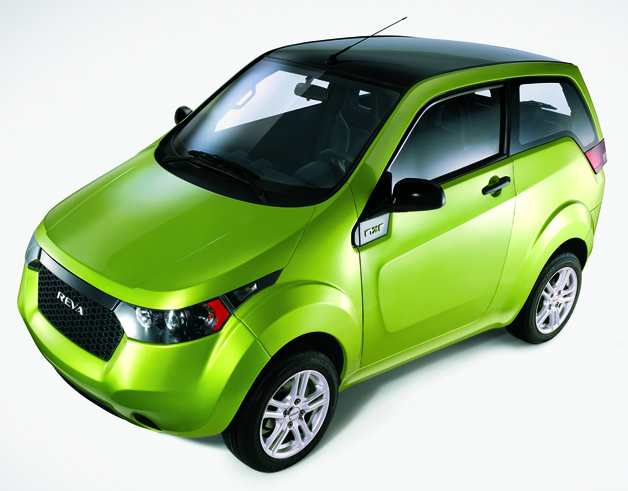
Electric Cars Reva NXR

The REVA NXR (NeXt Reva) is a new lithium-ion powered electric car from REVA Electric Car Company, which is scheduled to go into production early 2010. The REVA NXR and REVA NXG were launched at Frankfurt International Motor Show on 16th September 2009. The REVA NXG (NeXt Generation), REVA’s showcar, is the company’s 2011 model. REVA NXR is an M1 category three-door, four-seater hatchback family car that is suitable for urban driving. Top speed is 104 kph (65 mph) with a range of 160 kms (100 miles) per charge. If using the 90 minute fast charge (normal charging is eight hours), the REVA NXR offers an effective range of 320km a day. A fast charge for 15 minutes will provide a 40 km (25 mile) range.
reva-nxr-top-qtr
The REVA NXR has keyless entry and operation, dual charge ports, intelligent digital display and a range of telematics. These include SMS alerts and commands such as distance-to-empty and time-to-full charge, remote cabin heat/cool, a monthly eco-drive check by email, service and insurance alerts, remote diagnostics and healing and REVive remote emergency charge. REVive is exclusive to REVA and acts like an invisible reserve fuel tank and addresses ‘range anxiety’. If a customer runs out of charge, they can telephone or SMS REVA’s customer support centre. The advanced telematics feature will assess the car’s batteries remotely and activate a reserve amount of energy while protecting the battery life. Within minutes, a few extra kilometres of range are made available via the telematics and the driver can continue home or to a place where the NXR can be charged.
reva-nxr-rear

 Chetan Maini, deputy chairman and chief technology officer of REVA said today; “The NXR is a stylish city car packed full of user-friendly technology. You can order one from today and production will start early next year, so you can be one of the first to own the latest generation of electric cars.”
reva-nxr-nxg-driving1 

Specifications REVA NXR Li-Ion

Energy Usage 140 Wh/mile
Weight 1874 lbs
Range 100 miles
Power 25 kW
Torque 92Nm
Battery capacity 72V, 14 kWh
Battery type Lithium-ion
Fast Charge 90 minutes
Normal Charge 8 hr
Top Speed 65 mph
Price 14,995 euro (excluding batteries)
Available 2010